Concerns and Values in Human-Robot Interactions: A Focus on Social Robotics
Giulio Antonio Abbo, Tony Belpaeme and Micol SpitaleTL;DR
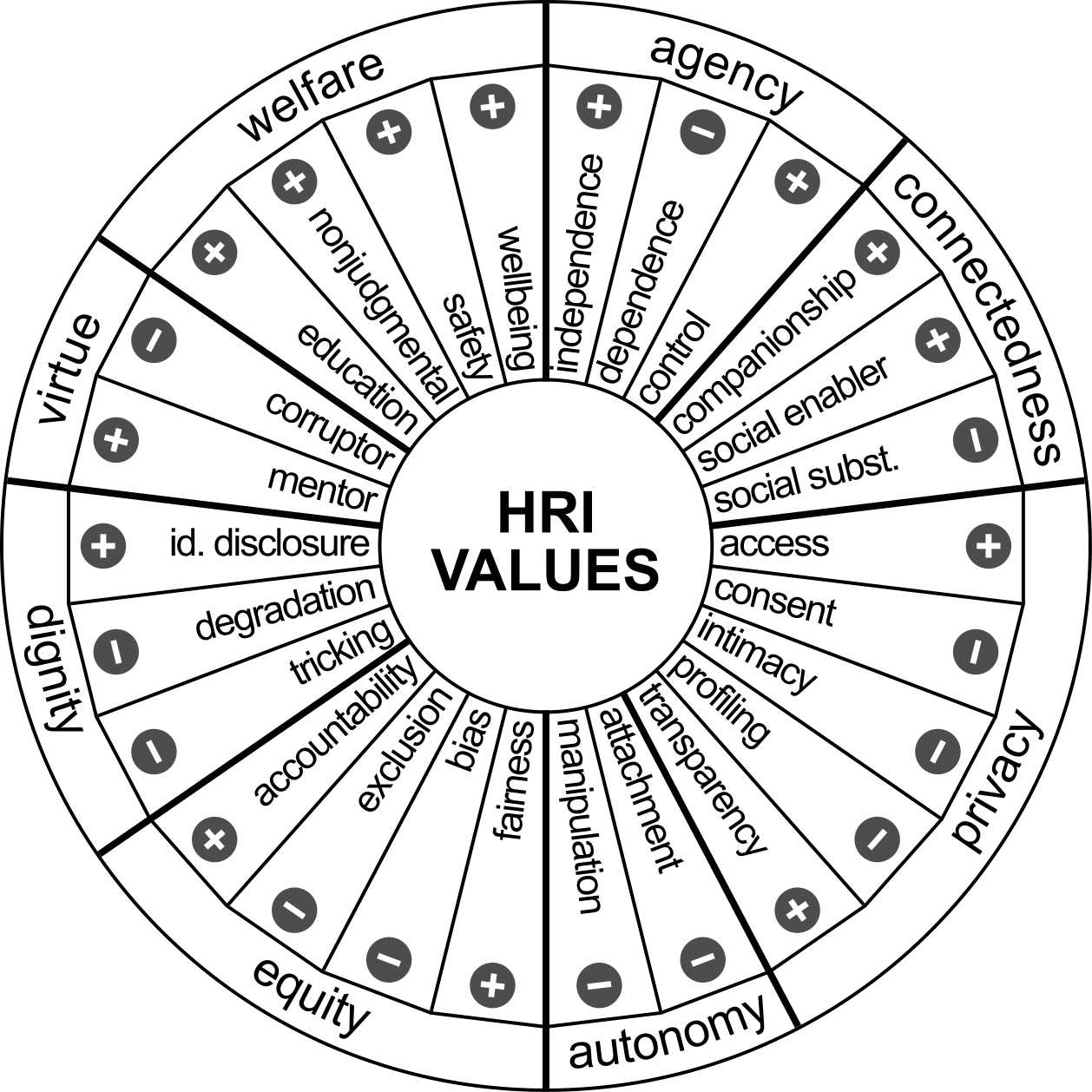
I conducted a scoping review of value discussions in HRI over the past two decades, identifying 26 recurring concerns, such as the impact of robots on human interactions, attachment to robotic companions, and algorithmic bias, all categorised under values like agency, connectedness, privacy, autonomy, equity, and dignity. Visit the HRI Value Compass to explore these values and concerns in detail, and to find resources for designing robots that align with human values.
PUBLICATIONS IN THIS RESEARCH LINE
HRI Values
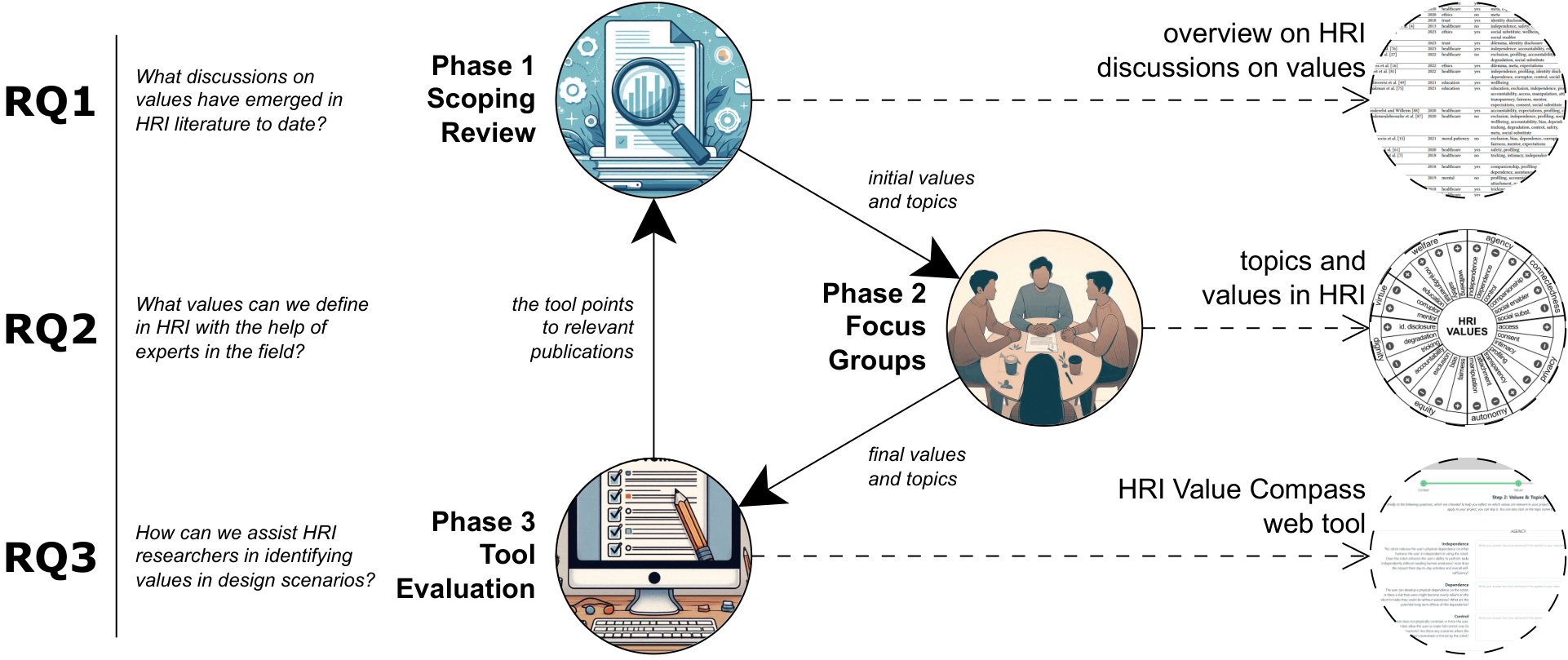
An overview of the research process.
We examined the HRI literature of the past two decades, with a focus on robots for social good, in healthcare, education, and private homes and we ran a thematic analysis to identify recurring concerns and values.
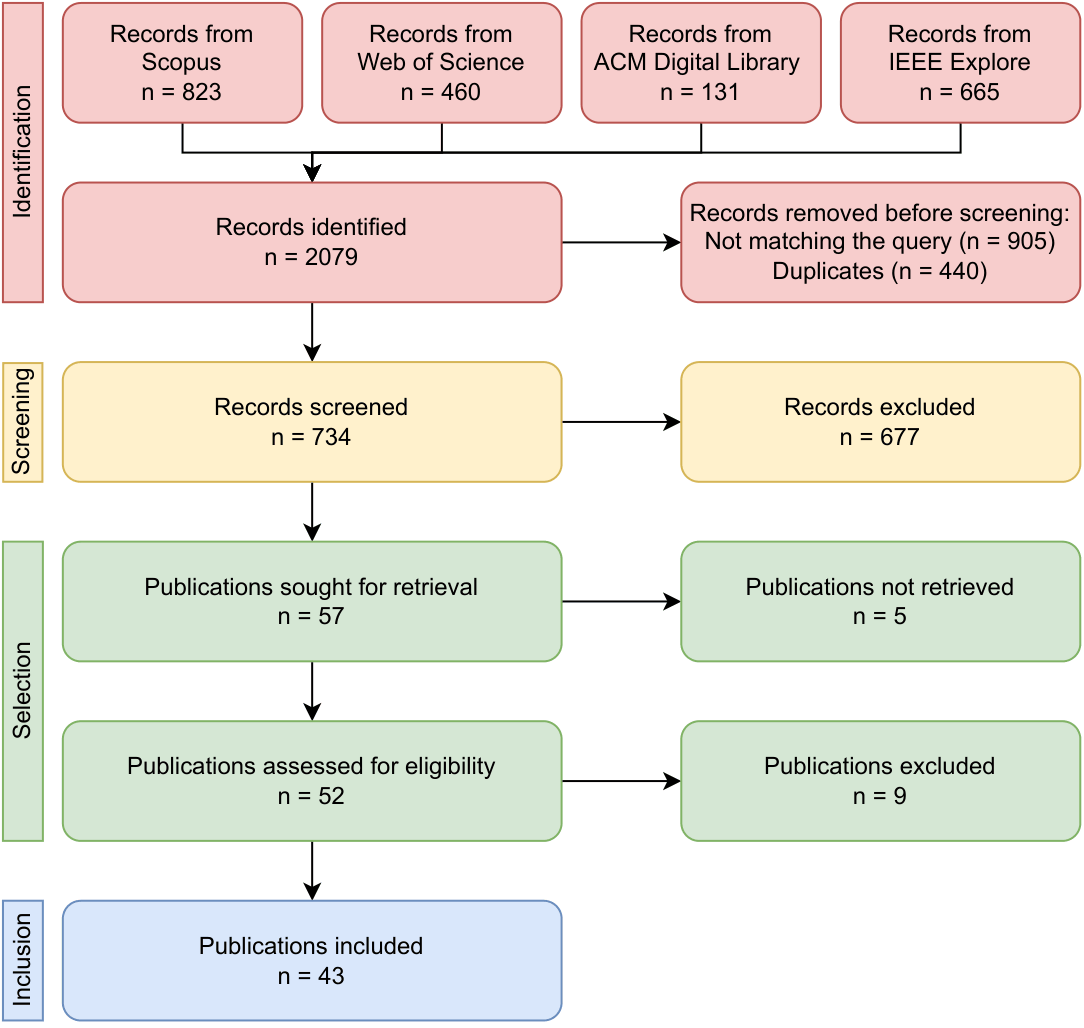
PRISMA flow diagram of the scoping review process.
Through two focus groups with experts in technology ethics, we validated the concerns and values identified in the literature. The following table summarises the concerns and values identified in our study.
| Value | Topic - Positive | Topic - Negative | Description |
|---|---|---|---|
| agency | independence | The robot reduces the user’s physical dependence on other humans; the user is independent in using the robot. | |
| agency | dependence | The user can develop a physical dependence on the robot. | |
| agency | control | The robot does not physically constrain or force the user. | |
| connectedness | companionship | The robot can provide companionship. | |
| connectedness | social enabler | The robot can facilitate connections between humans. | |
| connectedness | social substitute | The robot can reduce social interactions. | |
| privacy | access | The users, or people selected by them, can have access to the data collected by the robot. | |
| privacy | consent | The robot invades bystanders’ privacy. | |
| privacy | intimacy | The robot’s constant presence invades private spaces, causing discomfort and a panopticon effect. | |
| privacy | profiling | The robot collects data continuously or aggressively; data safety and protection. | |
| privacy | transparency | The robot’s functionalities and monitoring capabilities are clearly stated. | |
| autonomy | attachment | The user can develop an emotional dependency on the robot, reducing the autonomy. | |
| autonomy | manipulation | The robot can influence the user with persuasion and nudging. | |
| equity | fairness | The robot treats everyone fairly according to their needs. | |
| equity | bias | Some users do not feel part of the intended audience (algorithmic bias). | |
| equity | exclusion | The robot is not personalised to the user demographic: preferences, habits, economic background… | |
| equity | accountability | The person responsible for the robot’s actions is fairly accountable. | |
| dignity | tricking | The robot should not lie or trick the users into anthropomorphising its behaviour. | |
| dignity | degradation | The users might perceive interacting with a robot instead of a human as humiliating. | |
| dignity | identity disclosure | The robot’s artificial nature is clearly stated. | |
| virtue | mentor | The robot can set a good example and foster virtuous interactions. | |
| virtue | corruptor | The users can exercise unkind behaviour towards the robot, with negative effects on subsequent human interactions. | |
| welfare | education | The robot can teach topics, thought processes, and routines. | |
| welfare | nonjudgmental | The user can be sincere with the robot, as it has no sentiments. | |
| welfare | safety | The robot is safe and it does not harm the users. | |
| welfare | wellbeing | The robot allows disclosure and can give advice. |
Finally, we developed a tool to help HRI researchers identify these values in robot design. The tool, called the HRI Value Compass, is a questionnaire that allows users to explore the values and concerns identified in our study. The tool was evaluated in a pilot study and is available online at hri-value-compass.github.io. A printable version of the tool is available on Zenodo.
Abstract
Robots, as AI with physical instantiation, inhabit our social and physical world, where their actions have both social and physical consequences, posing challenges for researchers when designing social robots. This study starts with a scoping review to identify discussions and potential concerns arising from interactions with robotic systems in the context of healthcare, education, and private homes. Two focus groups of technology ethics experts then validated a comprehensive list of key topics and values in human-robot interaction (HRI) literature in these contexts. These insights were integrated into the HRI Value Compass web tool, to help HRI researchers identify these values in robot design. The tool was evaluated in a pilot study. This work benefits the HRI community by highlighting key concerns in human-robot interactions and providing an instrument to help researchers design robots that align with human values, ensuring future robotic systems adhere to these values in social applications.
ACM Reference
Giulio Antonio Abbo, Tony Belpaeme, and Micol Spitale. 2026. Concerns and Values in Human-Robot Interactions: A Focus on Social Robotics. International Journal of Social Robotics 18, 1 (January 2026), 4. DOI:https://doi.org/10.1007/s12369-025-01351-1BibTeX
@article{abbo2025concernsvalueshumanrobotinteractions,
  author={Abbo, Giulio Antonio
  and Belpaeme, Tony
  and Spitale, Micol},
  title={Concerns and Values in Human-Robot Interactions: A Focus on Social Robotics},
  journal={International Journal of Social Robotics},
  year={2026},
  month={Jan},
  day={14},
  volume={18},
  number={1},
  pages={4},
  issn={1875-4805},
  doi={10.1007/s12369-025-01351-1},
  url={https://doi.org/10.1007/s12369-025-01351-1}
}